Sayuri–Satsu relationship
Memoirs of a GeishaThe Sayuri–Satsu relationship is a sisterly bond marked by separation: Satsu runs away when Sayuri is young, and their lives diverge, yet Sayuri continues to carry her sister within her. In Sayuri’s late reflection, the loss is not undone; it becomes part of a larger understanding that people who have left can remain inwardly present through memory.
Separation and Its Lasting Mark
Sayuri recalls Satsu among the people she has lost or who have gone away. In a dream near the end of her life with the Chairman, she imagines drinking a soup filled with everyone she has cared for. Satsu is there with Sayuri’s parents, Mr. Tanaka, Nobu, and the Chairman: the list places her sister’s departure within a lifetime of attachment, bereavement, and estrangement, without suggesting that these losses happened in the same way.
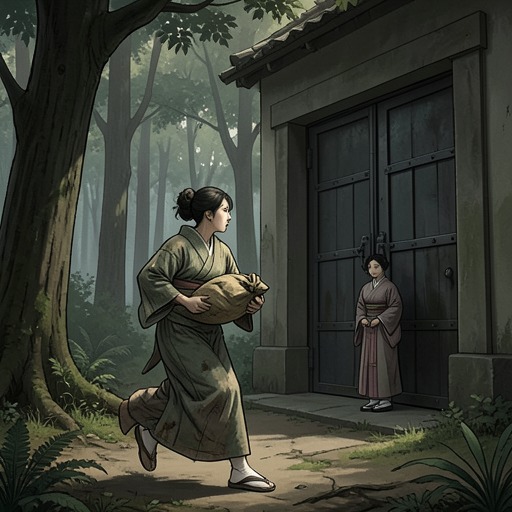
Satsu’s departure is especially significant because Sayuri remembers that she ran away and left her when Sayuri was still very young. The recollection makes the separation an early and defining absence in Sayuri’s family life. The dream does not supply a reunion or a new exchange between the sisters; instead, it shows how Sayuri’s continuing attachment survives at a distance.
Memory as Continued Presence
In the dream, an elderly man explains that his deeply loved wife is not wholly gone because the pleasure of their time together lives on inside him. Sayuri understands the story through the soup she drinks: it contains what she has cared for, and each sip makes the absent people feel inwardly present. Satsu’s place in this image is not that of someone physically returned, but of a sister whose remembered existence remains part of Sayuri.
Sayuri awakens with tears and fears the Chairman’s approaching death. The remembered dream then broadens into a reflection on how loss can be borne: when the Chairman dies a few months later, Sayuri understands his departure as natural, like leaves falling from trees, and says that she still has him in the richness of her memories. That later insight also clarifies the emotional shape of her bond with Satsu. The separation remains real, but it need not mean that the person has vanished from Sayuri’s inner life.
Place in Sayuri’s Retrospective
The sisters’ relationship appears here through Sayuri’s retrospective voice, not through a detailed account of their shared childhood or Satsu’s later life. Its force lies in the way a brief recollection of Satsu joins the dream’s gathering of the people Sayuri has loved and lost. By including her sister in the soup, Sayuri makes an early separation part of the story she tells about memory: people may leave, yet what they meant can continue to live within those left behind.